 SimRacingPicks
Sim-Lab P1-X Racing Cockpit Review — The undisputed gold standard of sim racing cockpits proves that massive weight and industrial design are exactly what you need for an uncompromising setup
TL;DR
If you have the space and budget, this chassis will handle any direct drive wheel and heavy load cell pedal set without breaking a sweat. The tradeoff is a lengthy assembly process and a rig that is incredibly heavy to move once built.
Verdict: Buy
What people are saying
Sources disclosed below
Reviewer Verdicts
Avg of 4 video reviews
Sim Racing Garage, Boosted Media, The Sim Channel…
Reddit Discussion
Across 42 threads in r/simracing, r/iRacing, r/simracingrigs, r/AssettoCorsa, r/granturismo, r/F1Game
Sentiment summary, not a rating
Pros
- +Exceptional rigidity with zero flex, even with high-torque DD wheels and heavy load cell pedals
- +Infinite adjustability and expandability thanks to the standard 40-series aluminum profile
- +High-quality assembly hardware, specifically the spring-ball t-nuts and gusseted corner brackets
- +Broad cross-compatibility with third-party accessories and standard industrial parts
Cons
- −Extremely heavy (55kg bare) and difficult to move once assembled
- −Assembly is a time-consuming process that can be intimidating for beginners
- −Hidden costs, as many necessary parts like seat rails and specific mounts are sold separately
Jordan Kim
Published May 3, 2026
Price may vary. Updated regularly.
Sim-Lab's 120-pound aluminum behemoth is so rigid it actually dampens force feedback vibrations. If you’re tired of your steering column flexing under the torque of a high-end direct drive wheel, you’ve likely already heard the name P1-X whispered in every corner of the sim racing community. It isn't just a cockpit; it’s a piece of industrial infrastructure that happens to let you drive virtual cars.
What you're actually getting
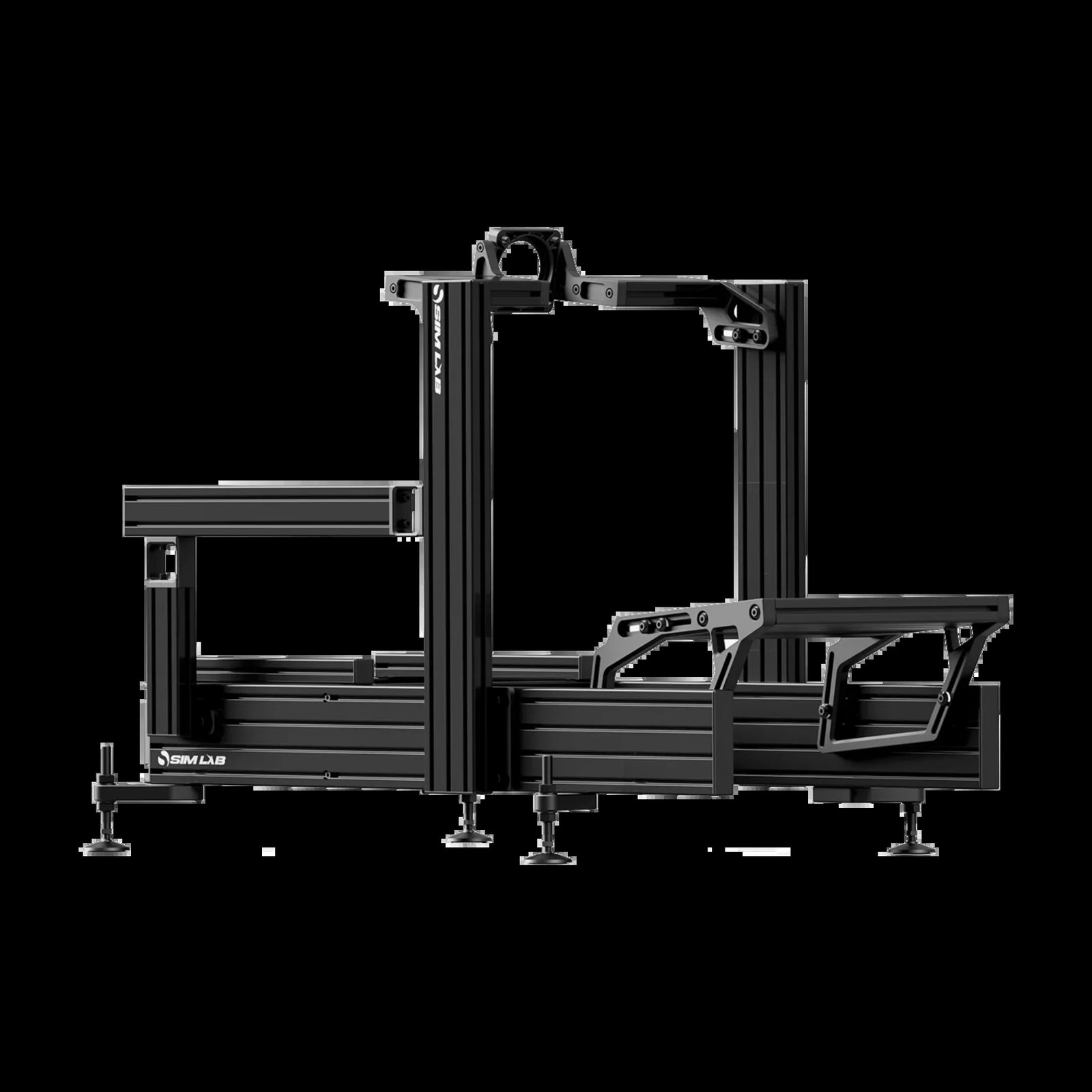
When you commit to the P1-X, you aren't buying a piece of furniture—you’re buying a foundation. This rig is built from 160x40mm aluminum profile, and it feels like it was ripped straight out of a factory floor. Once you’ve spent the better part of an afternoon tightening every bolt, you’re left with a chassis that is effectively immovable. As The Sim Channel noted, "I have previously called this rig the gold standard in aluminum profile rigs... that title is deserved."
The rigidity here is absolute. Whether you’re running a 20Nm direct drive base or slamming on a set of load cell pedals that require 100kg of force, the P1-X doesn't budge. Boosted Media hit the nail on the head when they mentioned, "Absolutely no discernible flex when I'm driving with the 120 kilogram load cell pedals." It’s a stark contrast to the entry-level rigs that groan and twist under pressure, turning your expensive pedal inputs into mushy, inconsistent feedback.
However, you need to be prepared for the reality of owning a 55kg skeleton. This isn't something you slide into a closet when you're done for the night. It’s a permanent fixture. The assembly process is equally demanding; it’s a test of patience that requires a decent set of hex keys and a clear head. But the payoff is the ecosystem. Because it uses standard 40-series profile, you can bolt on almost anything—shifters, handbrakes, monitor mounts, or custom button boxes—without ever needing to drill a hole.
Sound and structural reality
The P1-X is so over-engineered that it actually changes how you experience your hardware. Because the frame is so dense, it absorbs the micro-vibrations that usually travel through lighter rigs.
| Metric | Value | Context |
|---|---|---|
| Base weight | 55 kg | Requires two people to move |
| Main profile | 160x40mm | Industrial-grade rigidity |
| Upright profile | 120x40mm | Handles high-torque DD |
| Total length | 1.35 meters | Needs dedicated floor space |
- The Vibration Trade-off: Because the chassis is so deadened, you lose the "natural" vibration of the wheel base vibrating through the frame. You’ll likely need to invest in tactile transducers (bass shakers) to get that immersion back.
- The T-Nut Advantage: The spring-ball t-nuts are a life-saver. As Sim Racing Garage pointed out, "These spring ball t-nuts are invaluable because you don't have to slide them down from the end." It makes adjusting your pedal deck or wheel height a five-minute job rather than a total teardown.
Where it actually wins
The P1-X wins on pure, unadulterated future-proofing. When you buy this, you are buying the last rig you will ever need to purchase. The gusseted corner brackets and high-quality hardware mean that even after years of heavy use, you won't find yourself chasing loose bolts or dealing with structural fatigue.
The adjustability is the other major victory. If you decide to switch from a GT-style seating position to a Formula-style reclined setup, the P1-X accommodates it with ease. The sheer amount of surface area provided by the 160mm base profile means you can mount your peripherals exactly where you want them, not just where the manufacturer decided they should go. It’s a blank canvas for the serious enthusiast.
Where it falls short
The biggest hurdle is the "hidden" cost of entry. While the base price gets you the frame, you’ll quickly realize you need to buy seat rails, seat brackets, and specific mounting plates for your wheelbase. By the time you’ve added the accessories required to actually sit in it and mount your gear, the price tag climbs significantly.
Then there’s the weight. If you live in an apartment or a room where you need to move your gear occasionally, the P1-X is a nightmare. It’s heavy, awkward to maneuver, and once it’s in place, it stays there. If you’re a beginner who isn't sure if they’ll be sim racing in two years, this is massive overkill. You’re paying for a level of industrial stability that you might not even be utilizing yet.
Should you buy it?
Buy if you
- Are running high-torque direct drive wheels and heavy-duty load cell pedals.
- Have a dedicated space where the rig can live permanently.
- Value infinite adjustability and want a rig that will last a decade.
Skip if you
- Need to move or store your rig between sessions.
- Are on a tight budget that doesn't account for the necessary add-ons like seat rails and mounts.
- Are a casual racer who doesn't need industrial-grade structural integrity.
The Sim-Lab P1-X is the definitive endgame aluminum profile cockpit, offering uncompromising rigidity and infinite customization.
Sources consulted
- Sim Racing Garage — Sim Lab P1-X Sim Racing Chassis Review
- Boosted Media — REVIEW - Sim-Lab P1X Pro Sim Racing Cockpit
- The Sim Channel — Review: Sim-Lab P1-X
- Boosted Media — REVIEW - Sim-lab P1-X Aluminium Profile Sim Racing Cockpit - My thoughts after 2 months
Synthesis combines independent reviews above. Verdicts and quotes attributed to original creators. Affiliate disclosure: we may earn a commission from qualifying purchases via Amazon links.
Products covered in this review
Frequently Asked Questions
Is the Sim-Lab P1-X Racing Cockpit worth buying?
If you have the space and budget, this chassis will handle any direct drive wheel and heavy load cell pedal set without breaking a sweat. The tradeoff is a lengthy assembly process and a rig that is incredibly heavy to move once built.
Who is the Sim-Lab P1-X Racing Cockpit best for?
Serious sim racers using high-torque direct drive wheels and heavy load cell pedals who want a future-proof, endgame chassis.
Who should skip it?
Casual racers with limited space, those who need to move their rig frequently, or buyers on a strict budget.