 SimRacingPicks
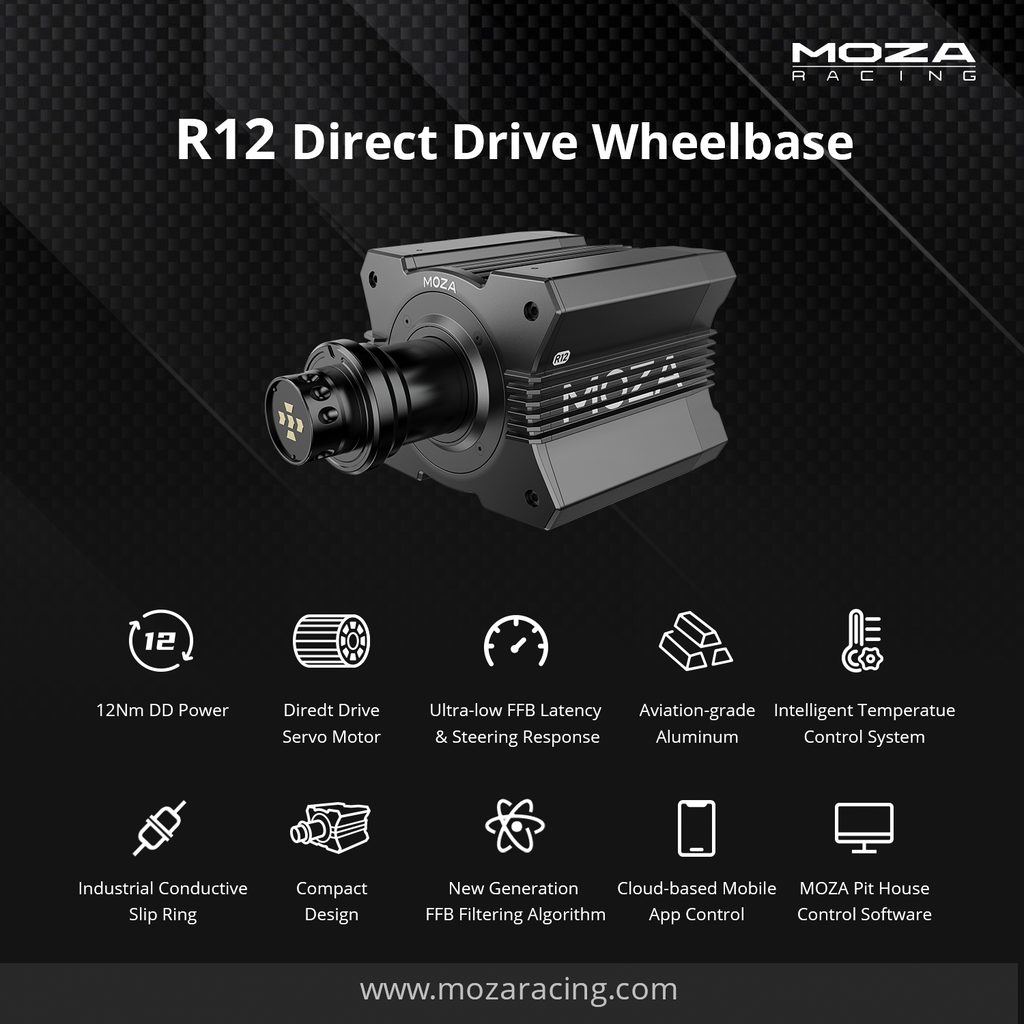
Moza R12 Direct Drive Wheel Base (12 Nm) Review — The perfectly executed mid-range sweet spot that makes entry-level bases feel obsolete and flagship bases feel overpriced
TL;DR
At 12 Nm, the R12 provides enough torque headroom to deliver incredibly detailed road textures and dynamic range without being overwhelmingly expensive. While console compatibility is severely limited and long-term reliability remains a slight question mark, its premium aluminum
Verdict: Buy
What people are saying
Sources disclosed below
Reviewer Verdicts
Avg of 4 video reviews
OC Racing, TheNOOBIFIER1337, MOZA Racing…
Reddit Discussion
Across 8 threads in r/simracing, r/iRacing, r/simracingrigs, r/AssettoCorsa, r/granturismo, r/F1Game
Sentiment summary, not a rating
Pros
- +12 Nm of torque hits the perfect 'sweet spot' for force feedback and fidelity
- +Exceptional build quality with a compact, aviation-grade aluminum housing
- +Moza Pit House software is highly intuitive, clean, and customizable
- +Rear peripheral ports allow pedals and shifters to connect directly, reducing cable clutter
- +Silent operation with excellent passive thermal management
Cons
- −Strictly PC-focused with zero native PlayStation support and only conditional Xbox support
- −Requires significant software tinkering to dial in the best force feedback feel
- −Bottom-only mounting limits installation options on higher-end aluminum profile rigs
- −Power button is located on the back, making it hard to reach once mounted
Jordan Kim
Published May 3, 2026
Price may vary. Updated regularly.
Moza’s 12 Nm direct drive base delivers a massive jump in fidelity that makes flagship wheelbases feel like an exercise in diminishing returns. If you’ve been hovering around the entry-level direct drive market, you’re likely tired of the "toy-like" feeling of belt-driven wheels or the lack of headroom in 5-9 Nm bases. The R12 isn't just a spec bump; it’s the point where the hardware stops fighting you and starts communicating the road.
What you're actually getting
The R12 is a masterclass in the "sweet spot" philosophy. It’s built like a tank—an aviation-grade aluminum housing that feels like it could survive a nuclear apocalypse, as the marketing team likes to remind us. But beyond the industrial design, it’s the torque delivery that matters. At 12 Nm, you have enough headroom to feel the subtle weight transfer of a GT3 car under heavy braking without the wheel ripping your wrists off during a long endurance stint.
The software experience is where Moza really separates itself from the pack. The Pit House suite is clean, intuitive, and—crucially—doesn't feel like it was coded in a basement. You can dial in your force feedback settings with surgical precision. As TheNOOBIFIER1337 noted, "Going from 9 to 12 feels more like going from 9 to 14 in its fidelity." That extra 3 Nm isn't just about raw strength; it’s about the dynamic range that allows you to catch slides before they happen.
However, don't expect a plug-and-play miracle. You’ll spend time in the software menus to get the feel right. It’s not a "set it and forget it" device out of the box, but once you find your profile, the fidelity is genuinely impressive. SimRacingSetups pointed out that the base provides a "subtle, low-frequency rumbling that almost feels like a butt kicker is mounted to your sim rig," which adds a layer of immersion that cheaper bases simply can't replicate.
Sound and Performance Reality
| Metric | Value | Context |
|---|---|---|
| Peak Torque | 12 Nm | The gold standard for mid-range DD |
| Price | $559 - $600 | Competitive for the performance |
| Lap Time | 1-2s faster | Real-world gain via better feedback |
| Thermal | Passive | Silent, no annoying fan noise |
Where it actually wins
The R12 wins because it respects your desk space and your patience. The compact footprint is a godsend if you aren't running a dedicated full-sized aluminum profile rig, and the integrated peripheral ports are a brilliant touch. Being able to plug your pedals and shifter directly into the base instead of running a mess of USB cables to your PC is a quality-of-life feature that every manufacturer should adopt.
The thermal management is another silent victory. Because it uses passive cooling, you don't have to deal with the high-pitched whine of a cooling fan during quiet moments in a race. It just runs, stays cool, and keeps the force feedback consistent from the first lap to the last. If you’re coming from an R9, the jump in fidelity is noticeable; you’re getting a more refined, nuanced signal that translates to better car control.
Where it falls short
It isn't all perfect. The mounting situation is frustrating; you’re limited to bottom-only mounting, which feels like a relic of a cheaper design era. If you’re running a high-end aluminum profile rig, you’ll likely need to buy extra brackets to get this thing positioned correctly. Then there’s the power button, which is tucked away on the back—a classic "form over function" blunder that makes it a chore to reach if your rig is pushed against a wall.
The biggest hurdle, however, is the ecosystem lock-in. If you’re a console gamer, look elsewhere. The R12 is strictly for the PC crowd, with zero native PlayStation support and only conditional, finicky Xbox support. And while most users report a rock-solid quick release, there are enough whispers about quality control—like the issues reported by OC Racing—to suggest that Moza still has some work to do on their long-term reliability track record.
Should you buy it?
Buy if you:
- Are a PC-only sim racer looking for the best performance-to-dollar ratio.
- Want high-end fidelity without the massive footprint and cost of a 20+ Nm flagship base.
- Value a clean rig setup and appreciate integrated cable management.
Skip if you:
- Race on PlayStation or need seamless, native console compatibility.
- Already own a well-tuned R9 and aren't looking to deal with the hassle of selling it.
- Prefer a "plug-and-play" experience and don't want to spend time tweaking software profiles.
The MOZA R12 hits the absolute sweet spot for direct drive performance, offering high-end fidelity without the flagship price tag.
Sources consulted
- OC Racing — Watch This BEFORE You Buy The MOZA R12 (Review)
- TheNOOBIFIER1337 — MOZA R12 - Is it worth the extra money?
- MOZA Racing — MOZA R12 V2 DD Base Full Review
- SimRacingSetups — MOZA R9 vs R12 Wheel Base: Which Direct Drive Wheel To Buy?
Synthesis combines independent reviews above. Verdicts and quotes attributed to original creators. Affiliate disclosure: we may earn a commission from qualifying purchases via Amazon links.
Products covered in this review
Frequently Asked Questions
Is the Moza R12 Direct Drive Wheel Base (12 Nm) worth buying?
At 12 Nm, the R12 provides enough torque headroom to deliver incredibly detailed road textures and dynamic range without being overwhelmingly expensive. While console compatibility is severely limited and long-term reliability remains a slight question mark, its premium aluminum build, excellent software, and integrated cable management make it a top-tier choice for PC sim race
Who is the Moza R12 Direct Drive Wheel Base (12 Nm) best for?
PC sim racers upgrading from belt-driven wheels or entry-level direct drive bases looking for high-end fidelity.
Who should skip it?
PlayStation gamers, owners of the original MOZA R12 V1, or current R9 owners who cannot easily sell their existing base.