 SimRacingPicks
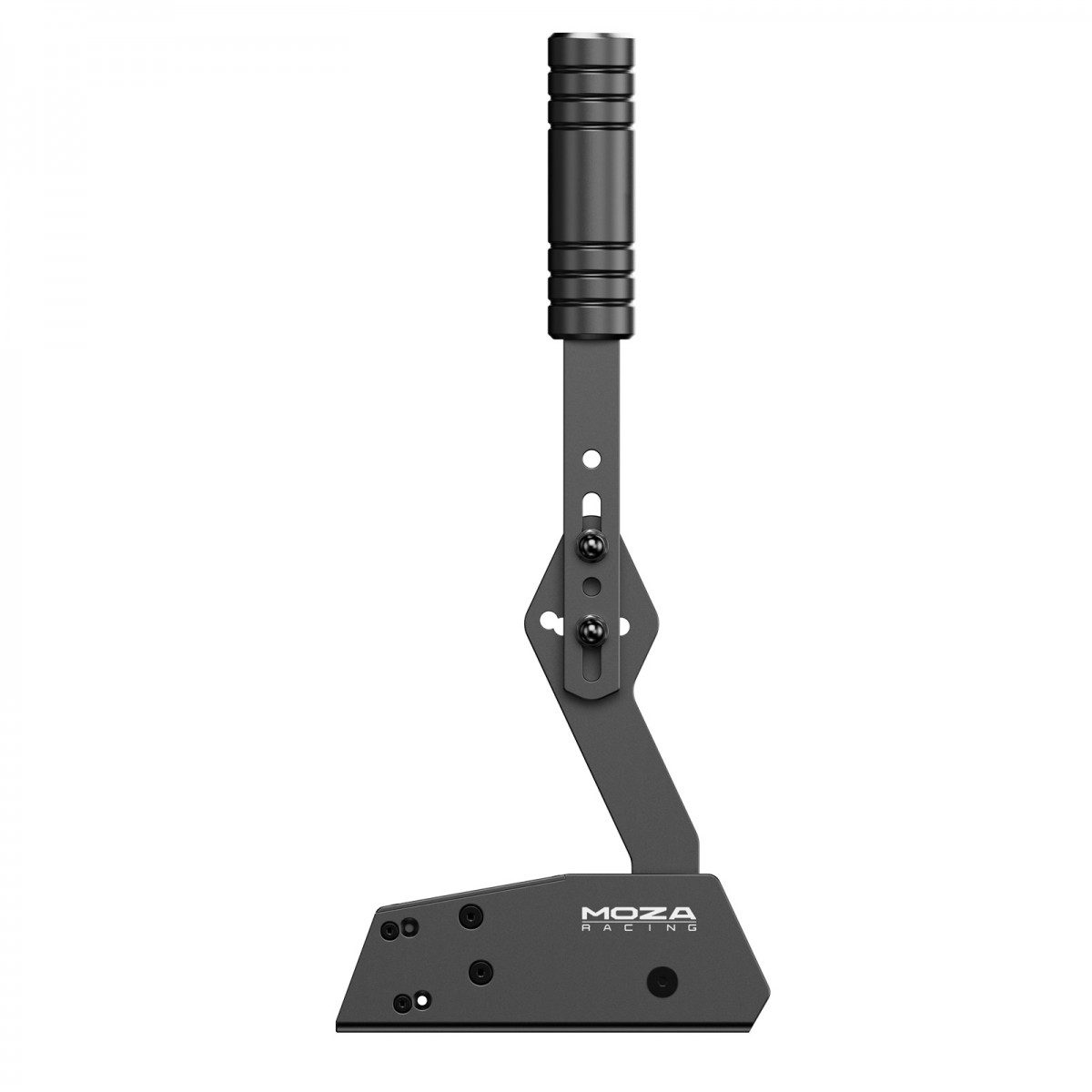
Moza HBP Handbrake (Hall Effect) Review — The ultra-budget underdog completely undercuts premium brands on sensor tech and price, but reminds you why you pay for name-brand mounting hardware
TL;DR
For a fraction of the cost of name-brand gear, you get a sturdy, progressive Hall effect handbrake that outperforms older potentiometer designs. However, you'll likely need to source your own mounting bolts, and the included desk clamps are practically useless.
Verdict: Depends on Use Case
What people are saying
Sources disclosed below
Reviewer Verdicts
Avg of 4 video reviews
TheCarDoc, DDF Racer, OC Racing…
Reddit Discussion
Across 2 threads in r/simracing, r/iRacing, r/simracingrigs, r/AssettoCorsa, r/granturismo, r/F1Game
Sentiment summary, not a rating
Pros
- +Extremely affordable compared to name-brand sim racing peripherals
- +Solid, heavy-duty metal construction that doesn't feel like a budget product
- +Uses reliable, contactless magnetic Hall sensors instead of failure-prone potentiometers
- +Provides smooth, progressive analog input for precise braking control
- +True plug-and-play USB functionality for PC users
Cons
- −Terrible mounting hardware, including defective desk clamps and oversized screws
- −Pre-drilled mounting holes do not align well with standard sim rigs
- −Barebones presentation with plain brown boxes and zero instructions
- −Not natively compatible with consoles without third-party adapters like DriveHub
Jordan Kim
Published May 3, 2026
Price may vary. Updated regularly.
You don't need to spend $200 on a name-brand handbrake when a $50 generic clone offers better sensor reliability. The sim racing industry has spent years convincing you that a handbrake is a premium luxury item, but the reality is that the underlying tech—a magnet and a sensor—is dirt cheap to manufacture.
What you're actually getting
When you pull this unit out of its plain, unbranded brown box, you’ll be genuinely surprised by the heft. It’s a solid chunk of metal that feels like it belongs in a real car, not a toy bin. Unlike the older, potentiometer-based handbrakes that eventually develop "jitter" or dead zones as the internal wiper wears out, this uses a contactless Hall effect sensor. It’s the same tech found in high-end flight sticks and modern racing pedals, meaning the input you get on day one will be identical to the input you get three years from now. As DDF Racer noted, "Although this is a cheap handbrake, they've not cheaped out on the electronics at all."
However, the "budget" reality hits you the moment you try to attach it to your setup. The manufacturers clearly spent their entire R&D budget on the sensor and the chassis, leaving nothing for the mounting hardware. You’re getting a desk clamp that feels like an afterthought and screws that seem to have been chosen at random from a hardware store bin.
If you’re expecting a polished, plug-and-play experience with a glossy manual and a branded sticker sheet, you’re in the wrong place. This is a "bring your own tools" situation. You aren't paying for the brand's customer support or a fancy ecosystem; you’re paying for the raw performance of a Hall sensor that, frankly, makes some $200 alternatives look like a bad joke.
Sound — what reviewers actually heard
While this isn't an audio product, the "feel" of the input is the equivalent of a clean signal path. Here is how the performance stacks up against the premium competition.
| Metric | Budget Hall Handbrake | Fanatec V2 Handbrake |
|---|---|---|
| Sensor Type | Hall Effect (Magnetic) | Hall Effect (Magnetic) |
| Price | ~$50 - $60 AUD | $200 + $20 adapter |
| Connection | Direct USB | Proprietary (Adapter needed) |
| Travel | Progressive | 60mm - 80mm adjustable |
Where it actually wins
The primary victory here is the democratization of progressive braking. For years, budget handbrakes were binary switches—either on or off. This unit provides a smooth, analog curve that allows you to actually modulate your drift or scrub speed in a rally stage. It’s a massive performance upgrade for anyone currently using a button on their wheel or a cheap digital switch.
Furthermore, the USB implementation is surprisingly robust. It’s true plug-and-play on PC; Windows recognizes it as a standard game controller immediately. You don't need to navigate proprietary software suites or worry about firmware updates that might break your connection. It just works, and it does so with a level of mechanical durability that defies its price tag.
Where it falls short
The mounting situation is a disaster. If you don't have a dedicated aluminum profile rig where you can drill your own holes or use T-nuts, you are going to have a miserable time. Sim Racing Corner was blunt about this, warning that "after filming I found some serious issues with the clamp. I would only recommend hard mounting this." The included desk clamp is flimsy and prone to slipping under the pressure of a hard pull, which is exactly when you need it to be most secure.
Then there’s the lack of console support. If you’re playing on a PlayStation or Xbox, this is a paperweight unless you drop another $80-$100 on a third-party adapter like a DriveHub. By the time you buy the adapter and the mounting hardware you’ll inevitably need to replace, the "budget" advantage starts to evaporate. It’s a PC-only tool for a reason.
Should you buy it?
Buy if you
- Use a PC for your sim racing.
- Have a dedicated rig (aluminum profile or steel) where you can hard-mount the unit.
- Want the precision of a Hall sensor without the "brand tax."
- Are comfortable sourcing your own M6 or M8 bolts to get a secure fit.
Skip if you
- Race on a console (PS5/Xbox).
- Use a desk setup and rely on a clamp to keep your gear in place.
- Want a premium out-of-the-box experience with instructions and support.
- Need a specific aesthetic to match a high-end ecosystem like Fanatec or Simucube.
These unbranded budget handbrakes deliver shocking build quality and reliable Hall sensors, but terrible mounting hardware means they belong on a dedicated rig, not a desk.
Sources consulted
- TheCarDoc — Will Expensive Sim Racing Pedals Make You Faster? Logitech G29 vs Fanatec vs VRS
- DDF Racer — Is a CHEAP sim racing handbrake worth it? Unboxing, installing and first impressions.
- OC Racing — I Can't Believe Fanatec Did This Again... ClubSport Handbrake V2 Review
- Sim Racing Corner — 14bit Hall Sensor USB Handbrake unboxing [Banggood]
Synthesis combines independent reviews above. Verdicts and quotes attributed to original creators. Affiliate disclosure: we may earn a commission from qualifying purchases via Amazon links.
Products covered in this review
Frequently Asked Questions
Is the Moza HBP Handbrake (Hall Effect) worth buying?
For a fraction of the cost of name-brand gear, you get a sturdy, progressive Hall effect handbrake that outperforms older potentiometer designs. However, you'll likely need to source your own mounting bolts, and the included desk clamps are practically useless.
Who is the Moza HBP Handbrake (Hall Effect) best for?
PC sim racers with a dedicated aluminum profile rig looking for a cheap, reliable handbrake for rally and drifting.
Who should skip it?
Console players, desk-mounters, or users who want a polished, out-of-the-box experience with instructions.