 SimRacingPicks
Logitech G RS Pedals — Sim Racing Pedals with 75 kg Load Cell Review — The budget underdog cannibalizes its premium older sibling by offering superior metal construction and faster lap times at a fraction of the cost
TL;DR
At just $160, getting a 75kg load cell brake with Hall effect sensors is an absolute steal that dramatically lowers the barrier to entry for serious sim racing. While the gas and optional clutch pedals feel a bit basic and lack angle adjustment, the brake performance is so good i
Verdict: Buy
What people are saying
Sources disclosed below
Reviewer Verdicts
Avg of 4 video reviews
Geek Street, Kireth, Inside Sim Racing…
Reddit Discussion
Across 61 threads in r/simracing, r/iRacing, r/simracingrigs, r/AssettoCorsa, r/granturismo, r/F1Game
Sentiment summary, not a rating
Pros
- +Incredible value at $160 for a true load cell pedal setup
- +75kg load cell brake provides realistic, highly customizable resistance
- +Excellent desk-mounting options including wall braces, extenders, and carpet grippers
- +Durable steel construction that feels superior to the plastic used on the more expensive G Pro pedals
- +Deep software tunability for progression and linearity via Logitech G Hub
Cons
- −The clutch pedal is sold separately, making the base unit a 2-pedal setup
- −Gas and clutch pedals utilize a basic spring design that lacks mechanical depth and feel
- −No physical angle adjustment available for the pedal faces
- −Console compatibility requires a Logitech wheelbase or a specific racing adapter
Jordan Kim
Published May 3, 2026
Price may vary. Updated regularly.
Logitech's $160 budget pedals are so good they beat their own flagship Pro pedals in lap shootouts. It’s a rare moment in hardware history where the "entry-level" option doesn't just compete with the premium tier—it makes the premium tier look like a bad investment.
What you're actually getting
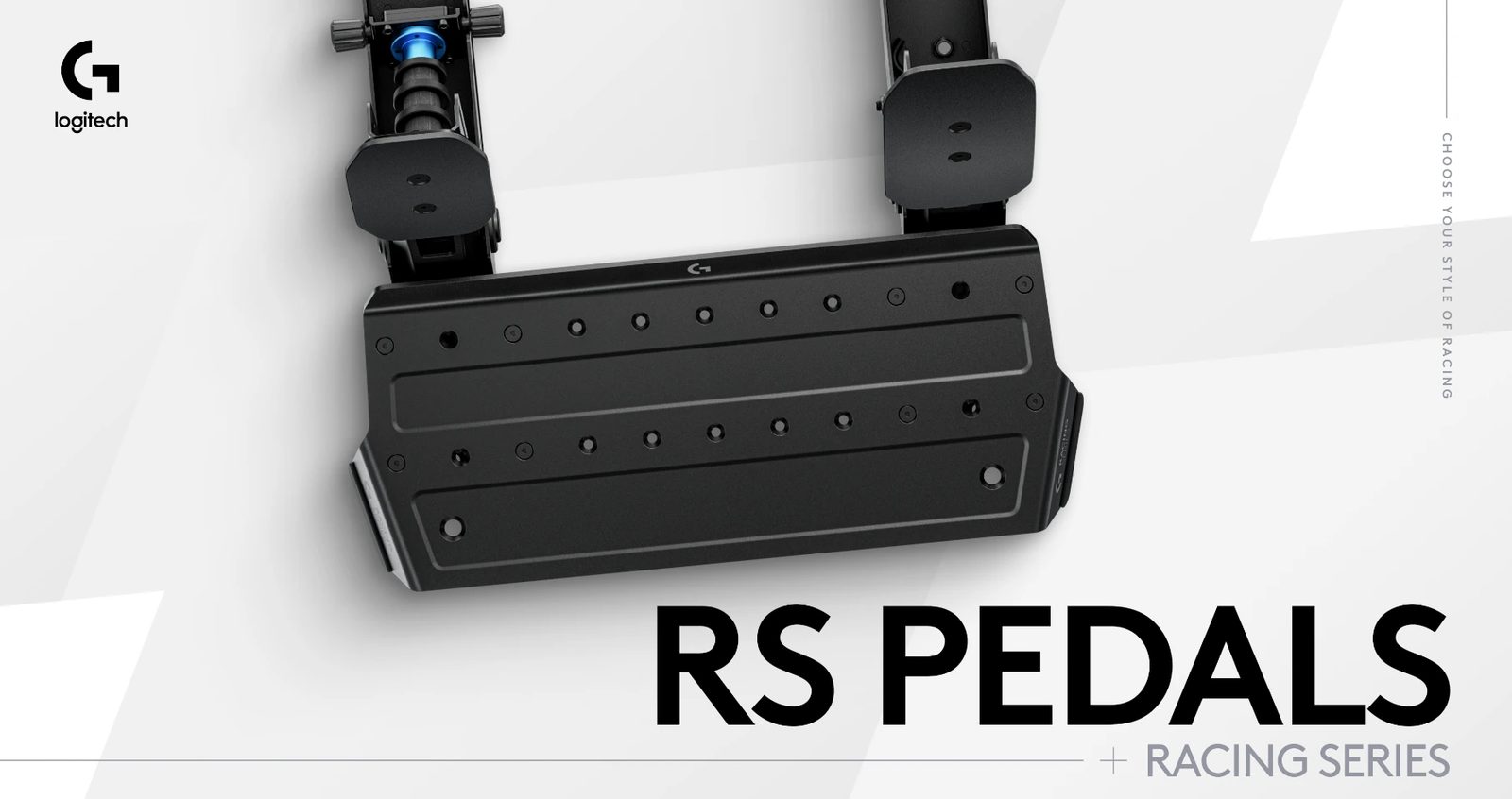
When you unbox the Logitech RS Pedals, you aren't getting a plastic toy. You’re getting a surprisingly robust steel chassis that feels more substantial than the more expensive G Pro pedals. Logitech has managed to strip away the fluff to focus on the one thing that actually matters for your lap times: the brake. By integrating a 75kg load cell, they’ve brought professional-grade muscle memory training to a price point that was previously reserved for entry-level potentiometers.
The performance gap between these and the G Pro pedals is non-existent in terms of raw output, and in some cases, it’s actually reversed. As Inside Sim Racing noted, "The proof is in the pudding... I ran these RS pedals and I was 2 tenths faster in a five-lap shootout." That’s not a marketing claim; that’s the reality of having a consistent, stiff brake pedal that allows you to trail-brake with surgical precision.
However, you have to remember that this is a modular system. You’re paying for the brake and the gas, but if you want a clutch, you’re reaching back into your wallet for another $45. While some might grumble about the "a la carte" pricing, it’s a smart move. It keeps the barrier to entry at $160, which is a screaming deal for a load cell setup. You’re essentially buying the best brake in the budget segment and accepting that the other two pedals are functional, if basic, spring-loaded companions.
Sound — what reviewers actually heard
While these aren't audio devices, the "sound" of your racing—the mechanical feedback—is vital. Here is how the hardware stacks up in the real world:
| Metric | Value | Context |
|---|---|---|
| Brake Load Cell | 75 kg | Provides true pressure-based braking |
| Base Price | $160 | Includes 2-pedal set |
| Clutch Add-on | $45 | Sold as a separate module |
| Lap Performance | 1:18.187 | Faster than the Pro series in testing |
Where it actually wins
The RS Pedals win because they prioritize the physics of driving over the aesthetics of a "pro" rig. The 75kg load cell is the star of the show. It’s stiff, it’s responsive, and it forces you to develop the leg strength required for actual track driving. Unlike cheaper pedals that rely on travel distance, this relies on pressure, which is the only way to achieve consistent braking points.
The mounting system is another massive win for the desk racer. Logitech included thoughtful touches like wall braces, extenders, and carpet grippers that make this setup incredibly stable even if you don't have a dedicated aluminum profile rig. You can slam on these pedals during a heavy braking zone at Monza without the unit sliding away from you, which is a common failure point for most entry-level gear.
Where it falls short
The biggest compromise is the lack of mechanical depth in the gas and clutch pedals. They use a standard spring design that lacks the progressive feel you’d find in high-end hydraulic or complex elastomer-based systems. If you’re a purist who needs to feel the exact bite point of a clutch or the nuanced resistance of a throttle, you’re going to find these pedals feeling a bit "hollow" compared to the brake.
Furthermore, the lack of physical angle adjustment is a glaring omission. If you have a specific seating position or ergonomic requirement, you’re stuck with the factory angle. You can tweak the software in G Hub to adjust linearity and progression, but you can’t physically tilt the pedal faces to match your ankle geometry. It’s a "take it or leave it" design that favors simplicity over customization.
Should you buy it?
Buy if you:
- Want a true load cell brake without spending $400+.
- Are a desk racer who needs a stable mounting solution that won't slide under pressure.
- Value lap times and consistency over fancy bells and whistles.
- Are already invested in the Logitech ecosystem.
Skip if you:
- Require high-end physical adjustability (pedal angle, spacing, or face height).
- Need a highly nuanced, multi-stage clutch feel for manual shifting.
- Are using a non-Logitech console setup that doesn't support the specific adapter requirements.
The Logitech RS Pedals deliver flagship-killing load cell performance at an unbeatable entry-level price.
Sources consulted
- Geek Street — Logitech RS50 + RS Pedals - DETAILED FULL Review
- Kireth — FULL REVIEW: Logitech RS50 Direct Drive Wheel and Load Cell Pedals (PC Xbox PlayStation)
- Inside Sim Racing — Logitech RS Pedals vs Pro Pedals | Which One Should You Actually Buy?
- Sim Racing Corner — Logitech G PRO Racing Pedals [REVIEW] A lot better than you might have expected!
Synthesis combines independent reviews above. Verdicts and quotes attributed to original creators. Affiliate disclosure: we may earn a commission from qualifying purchases via Amazon links.
Products covered in this review
Frequently Asked Questions
Is the Logitech G RS Pedals — Sim Racing Pedals with 75 kg Load Cell worth buying?
At just $160, getting a 75kg load cell brake with Hall effect sensors is an absolute steal that dramatically lowers the barrier to entry for serious sim racing. While the gas and optional clutch pedals feel a bit basic and lack angle adjustment, the brake performance is so good it actually helped reviewers beat their own lap times set on Logitech's much more expensive Pro pedal
Who is the Logitech G RS Pedals — Sim Racing Pedals with 75 kg Load Cell best for?
Entry-to-mid-level sim racers, desk racers needing the wall brace, and anyone in the Logitech ecosystem wanting a cheap load cell upgrade.
Who should skip it?
High-end rig owners who demand highly adjustable pedal angles, complex clutch bite points, or non-Logitech console compatibility.