 SimRacingPicks
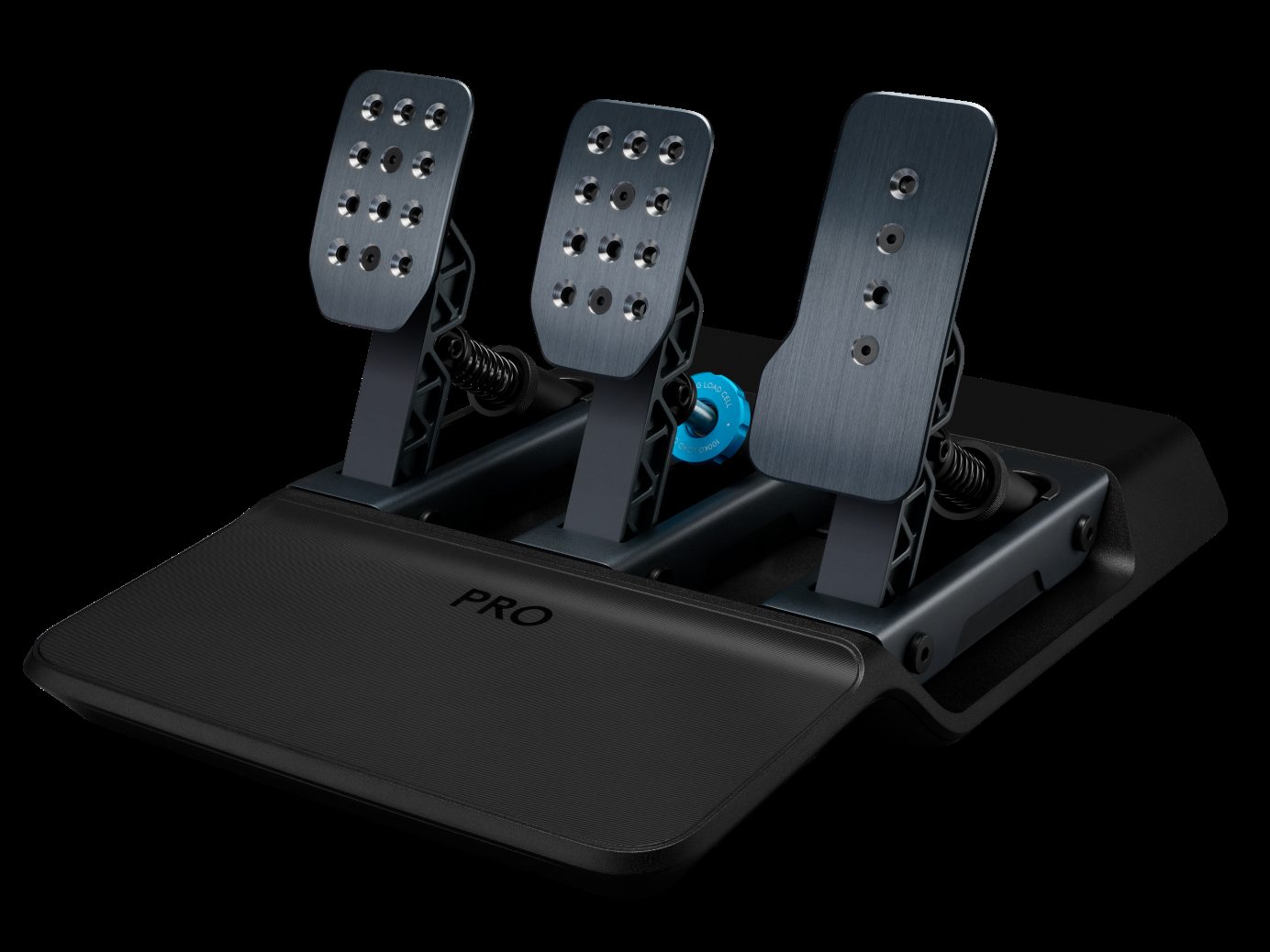
Logitech G PRO Racing Pedals (3-pedal load cell) Review — A much-needed evolution from toy-like entry-level gear to serious sim racing equipment, though the flagship model faces unexpected friendly fire from its own budget sibling
TL;DR
Moving to a load cell brake is the single biggest hardware upgrade you can make for lap time consistency, and Logitech's entry into this space is highly competent. However, while the $349 G PRO pedals offer a 100kg load cell and premium design, Logitech's newer $160 RS pedals pro
Verdict: Depends on Use Case
What people are saying
Sources disclosed below
Reviewer Verdicts
Avg of 4 video reviews
Boosted Media, Kireth, TheCarDoc…
Reddit Discussion
Across 13 threads in r/simracing, r/iRacing, r/simracingrigs, r/AssettoCorsa, r/granturismo, r/F1Game
Sentiment summary, not a rating
Pros
- +Massive consistency and muscle-memory improvement over older Logitech potentiometer pedals
- +Hall-effect sensors on the throttle and clutch eliminate old dust and debris reliability issues
- +Good adjustability via swappable elastomers and the G Hub software tuning
- +Versatile mounting options, including floor/wall bracing for desk users without a full rig
Cons
- −Console compatibility requires buying into the closed Logitech wheelbase ecosystem or using specific adapters
- −Throttle and clutch pedals feel somewhat basic and lack the premium mechanical depth of higher-end boutique pedals
- −The flagship Pro pedals face severe value competition from Logitech's own cheaper RS pedal line
Jordan Kim
Published May 3, 2026
Price may vary. Updated regularly.
Logitech's flagship $349 G PRO pedals might actually be slower than their new $160 budget option. It’s a classic case of engineering overkill meeting the harsh reality of the stopwatch, proving that in sim racing, the most expensive piece of kit isn't always the one that puts you on the podium.
What you're actually getting
For years, Logitech was the king of the "entry-level" hill, but their pedals were essentially glorified toys—potentiometer-based units that lacked the precision required for serious racing. The G PRO Racing Pedals represent a massive pivot. By moving to a 100kg load cell brake and Hall-effect sensors for the throttle and clutch, Logitech has finally entered the realm of serious sim hardware. As Boosted Media noted, this is "a big step up from the potentiometer or position-based pedals that we've seen from Logitech in the past."
When you unbox these, you’re getting a heavy, industrial-feeling piece of kit. The adjustability is the real star here; you can swap out elastomers to tune the brake feel to your liking, and the G Hub software actually works well for calibrating deadzones and curves. It’s a massive improvement for muscle memory. If you’ve been struggling to hit the same braking point lap after lap, the load cell will fix that immediately.
However, the "Pro" branding comes with a "Pro" price tag that feels increasingly difficult to justify. Logitech’s own RS pedal line has effectively cannibalized the flagship model. While the G PRO pedals are built like a tank, they aren't necessarily the fastest tool in the shed. When you look at the data, the diminishing returns are glaring. You aren't just paying for performance; you're paying for the premium finish and the specific ecosystem lock-in.
Sound — what reviewers actually heard
| Metric | G PRO Value | RS Pedal Value |
|---|---|---|
| Load Cell Force | 100 kg | 75 kg |
| Price | $349 | ~$205 |
| Lap Time | 1:18.416 | 1:18.187 |
- Brake Feel: The 100kg load cell is stiff and consistent, but some users find the 75kg RS pedal easier to modulate for long-distance endurance racing.
- Throttle/Clutch: Hall-effect sensors mean no more "flickering" inputs caused by dust or debris—a massive reliability win over the old G29/G920 days.
- Adjustability: Both sets offer decent elastomer swaps, but the G PRO allows for more granular physical positioning.
Where it actually wins
The G PRO pedals win on pure, unadulterated consistency. If you are coming from a G29 or a similar entry-level set, the jump to a load cell is the single most significant upgrade you can make to your lap times. You stop braking by "position" (how far your foot moves) and start braking by "pressure" (how hard you push), which is exactly how real race cars function.
The build quality is also a major selling point for those who don't have a dedicated aluminum profile rig. The mounting options are versatile enough that you can brace them against a wall or floor without them sliding away under heavy braking. If you’re a console racer locked into the Logitech ecosystem, these are the best pedals you can get without jumping ship to a different brand and losing compatibility.
Where it falls short
The biggest issue is the "friendly fire" from the RS pedals. As Inside Sim Racing pointed out, "The proof is in the pudding... I ran these RS pedals and I was two tenths faster than the Pro pedals." When a product that costs less than half as much is objectively faster for the average user, the flagship status of the G PRO starts to look like a marketing exercise.
Furthermore, the throttle and clutch pedals on the G PRO feel somewhat basic. While the brake is a high-end load cell, the other two pedals don't quite offer the mechanical depth or tactile feedback you’d expect at the $350 price point. If you’re a PC user, you’re also going to look at the competition—brands like Fanatec or VRS—and realize that for the same money, you could be getting a more modular, "pro-grade" experience that isn't tied to a specific wheelbase ecosystem.
Should you buy it?
Buy if you
- Are a console racer already committed to the Logitech G PRO wheelbase ecosystem.
- Need a reliable, load-cell pedal set that works out of the box without complex PC driver headaches.
- Value the heavy-duty, industrial aesthetic and want a set of pedals that will last for years of daily abuse.
Skip if you
- Are a PC-only racer who wants the best price-to-performance ratio (go for the RS pedals instead).
- Want to mix and match your gear with other brands like Fanatec or Moza.
- Are looking for the absolute pinnacle of pedal feel and adjustability; there are better boutique options at this price point.
Logitech's load cell pedals deliver a crucial consistency upgrade, but the cheaper RS version might actually outshine the flagship Pros.
Sources consulted
- Boosted Media — FULL REVIEW - Logitech G PRO Load Cell Sim Racing Pedals (PC/Xbox/PlayStation)
- Kireth — FULL REVIEW: Logitech RS50 Direct Drive Wheel and Load Cell Pedals (PC Xbox PlayStation)
- TheCarDoc — Will Expensive Sim Racing Pedals Make You Faster? Logitech G29 vs Fanatec vs VRS
- Inside Sim Racing — Logitech RS Pedals vs Pro Pedals | Which One Should You Actually Buy?
Synthesis combines independent reviews above. Verdicts and quotes attributed to original creators. Affiliate disclosure: we may earn a commission from qualifying purchases via Amazon links.
Products covered in this review
Frequently Asked Questions
Is the Logitech G PRO Racing Pedals (3-pedal load cell) worth buying?
Moving to a load cell brake is the single biggest hardware upgrade you can make for lap time consistency, and Logitech's entry into this space is highly competent. However, while the $349 G PRO pedals offer a 100kg load cell and premium design, Logitech's newer $160 RS pedals provide similar performance at half the price. Console users are locked into the Logitech ecosystem, bu
Who is the Logitech G PRO Racing Pedals (3-pedal load cell) best for?
Console racers already invested in Logitech direct drive wheelbases looking to upgrade from entry-level gear.
Who should skip it?
PC-only hardcore sim racers who want maximum adjustability, or those wanting to mix-and-match brands on console.