 SimRacingPicks
HORI Racing Wheel Overdrive (Xbox Series X|S, Xbox One, PC) — Officially Licensed by Microsoft Review — An ultra-budget racing wheel sacrifices premium features like force feedback but nails the fundamentals to deliver unbeatable value for beginners
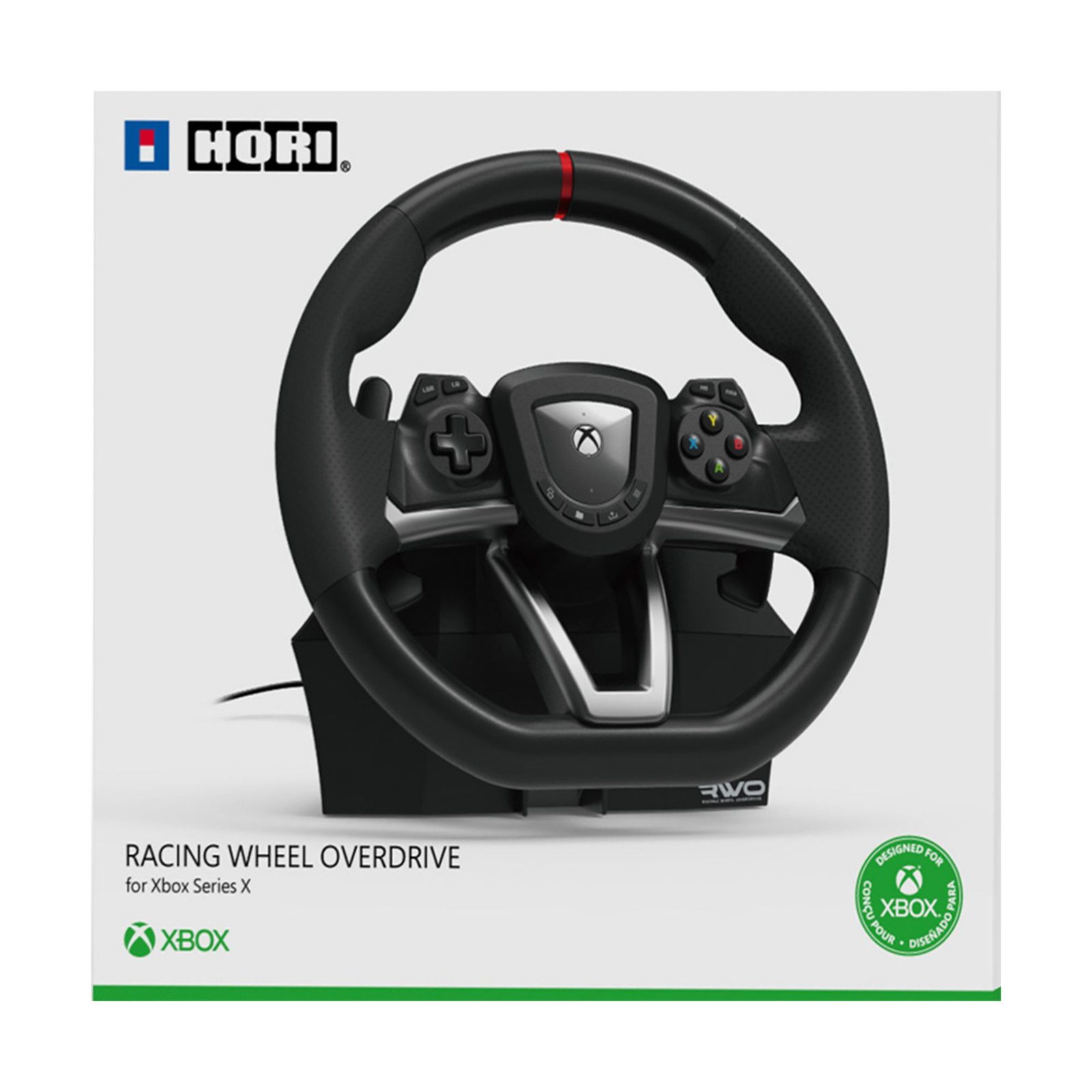
Reviewed Product
HORI Racing Wheel Overdrive (Xbox Series X|S, Xbox One, PC) — Officially Licensed by Microsoft$109.26 – $138.01 USD
TL;DR
At just $100, this officially licensed wheel delivers surprisingly solid build quality, grippy rubber textures, and sturdy pedals that punch above their weight class. However, the complete lack of force feedback or vibration means it won't satisfy sim racing purists looking for t
Verdict: Depends on Use Case
What people are saying
Sources disclosed below
Reviewer Verdicts
Avg of 4 video reviews
TheGamer, LUKSOFT, DrJuiceMan…
Pros
- +Highly affordable $100 price point makes it an ideal entry-level option
- +Rubberized grips and solid construction feel surprisingly sturdy, avoiding a cheap toy feel
- +Pedals offer good spring resistance and feature effective rubber stoppers to prevent sliding
- +Mounting clamp is secure, versatile, and easy to set up or remove from a desk
- +Officially licensed by Xbox with full button mapping and profile switching
Cons
- −Complete lack of force feedback, rumble, or vibration
- −Steering is limited to 270 degrees of rotation, lacking the 900 degrees found on pricier sim wheels
- −Paddle shifters are noticeably loud and clicky
- −No clutch pedal included in this base model
- −Pedal connection cord is frustratingly short
Jordan Kim
Published May 3, 2026
Price may vary. Updated regularly.
HORI's $100 Xbox racing wheel proves you don't need to spend $500 to ditch your controller. It’s a bold claim for a piece of hardware that costs less than a single high-end game, but after putting it through its paces, it’s clear that the Overdrive isn't trying to be a professional simulator—it’s trying to be the most fun you can have on a budget.
What you're actually getting
When you unbox the HORI Racing Wheel Overdrive, you need to manage your expectations immediately. This is not a direct-drive powerhouse; it is a bungee-cord-steered entry point. The build quality is surprisingly robust, featuring rubberized grips that feel far more premium than the price tag suggests. As Tech Tips noted, the construction feels solid, though TheGamer was less convinced by the plastic housing, noting that for this price, you’re essentially paying for the convenience of a wheel over a gamepad.
The mounting system is one of the unsung heroes here. It uses a secure, versatile clamp that grips onto a desk with enough tenacity to survive aggressive cornering in Forza. You aren't getting the nuanced road-feel of a $500 setup, but you are getting a device that stays put. It’s a plug-and-play experience that respects your time, even if the companion app can be a bit of a headache depending on your luck with software stability.
The biggest hurdle for most will be the lack of force feedback. If you’re coming from a high-end rig, the absence of rumble or vibration will feel like driving a car with the power steering cut out. As DrJuiceMan pointed out, the wheel doesn't vibrate or rumble like a standard Xbox controller, which creates a strange disconnect when you hit a rumble strip or go off-track. You’re relying entirely on visual and audio cues rather than tactile feedback.
Sound — what reviewers actually heard
| Metric | Value | Context |
|---|---|---|
| Price | $100 | Unbeatable entry-level cost |
| Rotation | 270 degrees | Limited, but fine for arcade racers |
| Connection | RJ11 | Standard pedal-to-wheel interface |
| Feedback | None | No rumble or force feedback |
- The "Bungee" Feel: The wheel uses a bungee cord mechanism to return to center. It’s not smooth like a motor-driven base; as Tech Tips put it, "It's always kind of fighting you as you're turning it."
- The Click Factor: The paddle shifters are loud. If you’re playing in a room with others, they’ll definitely hear every gear change.
- The Pedal Reach: The cable connecting the pedals to the wheel is notoriously short. If you have a deep desk or a wide setup, you might find yourself needing an extension.
Where it actually wins
The Overdrive wins by nailing the fundamentals of ergonomics. The rubberized grips are genuinely comfortable for long sessions, and the pedals—while basic—feature rubber stoppers that prevent them from sliding across hardwood or tile floors. That’s a massive win for a budget peripheral; there’s nothing worse than your brake pedal sliding away during a hairpin turn.
Furthermore, the official Xbox licensing means the button mapping is seamless. You get the full suite of Xbox inputs, including profile switching, which makes navigating menus and adjusting dead zones via the companion app (when it works) a breeze. It’s an ideal "first wheel" for someone who wants to experience the immersion of steering without the financial barrier to entry that usually keeps people stuck on a controller.
Where it falls short
The limitations are stark. The 270-degree steering rotation is the primary culprit here; it’s fine for arcade-style racers, but if you’re trying to play a serious sim like Assetto Corsa, you’ll find the steering ratio feels twitchy and unrealistic. You simply don't have the precision of a 900-degree wheel.
Then there’s the lack of force feedback. In modern racing games, the wheel is supposed to communicate the state of your tires—understeer, oversteer, and surface changes. With the Overdrive, you’re flying blind. You’re essentially using a glorified joystick shaped like a wheel. If you’re looking for a competitive edge or a realistic simulation experience, the lack of haptic feedback will leave you feeling disconnected from the car.
Should you buy it?
Buy if you
- Are a casual racing fan who wants a more immersive experience than a gamepad.
- Have a limited budget and want a sturdy, officially licensed product.
- Need a simple, easy-to-mount setup for a desk or small gaming space.
Skip if you
- Are a sim racing enthusiast who requires force feedback to feel the road.
- Need 900-degree rotation for realistic drifting or technical track driving.
- Expect a premium, vibration-heavy experience similar to a high-end controller.
A fantastic, sturdy entry-level wheel for $100, provided you can live without force feedback.
Sources consulted
- TheGamer — Can The Hori Xbox Racing Wheel Replace The Real Thing!?
- LUKSOFT — Hori Racing Wheel Overdrive (RWO) - UNBOXING & TEST | Xbox One/Xbox Series/PC Steering Wheel
- DrJuiceMan — Hori Racing Wheel Overdrive
- Tech Tips (Andrei) — HORI Racing Wheel Overdrive for Xbox Series X|S and Windows Review! The BEST Budget Racing Wheel!
Synthesis combines independent reviews above. Verdicts and quotes attributed to original creators. Affiliate disclosure: we may earn a commission from qualifying purchases via Amazon links.
Products covered in this review
Frequently Asked Questions
Is the HORI Racing Wheel Overdrive (Xbox Series X|S, Xbox One, PC) — Officially Licensed by Microsoft worth buying?
At just $100, this officially licensed wheel delivers surprisingly solid build quality, grippy rubber textures, and sturdy pedals that punch above their weight class. However, the complete lack of force feedback or vibration means it won't satisfy sim racing purists looking for true road feel.
Who is the HORI Racing Wheel Overdrive (Xbox Series X|S, Xbox One, PC) — Officially Licensed by Microsoft best for?
Casual racing fans, kids, and budget-conscious gamers looking for their very first steering wheel setup.
Who should skip it?
Serious sim racers who need force feedback, 900-degree rotation, or a dedicated clutch pedal.