 SimRacingPicks
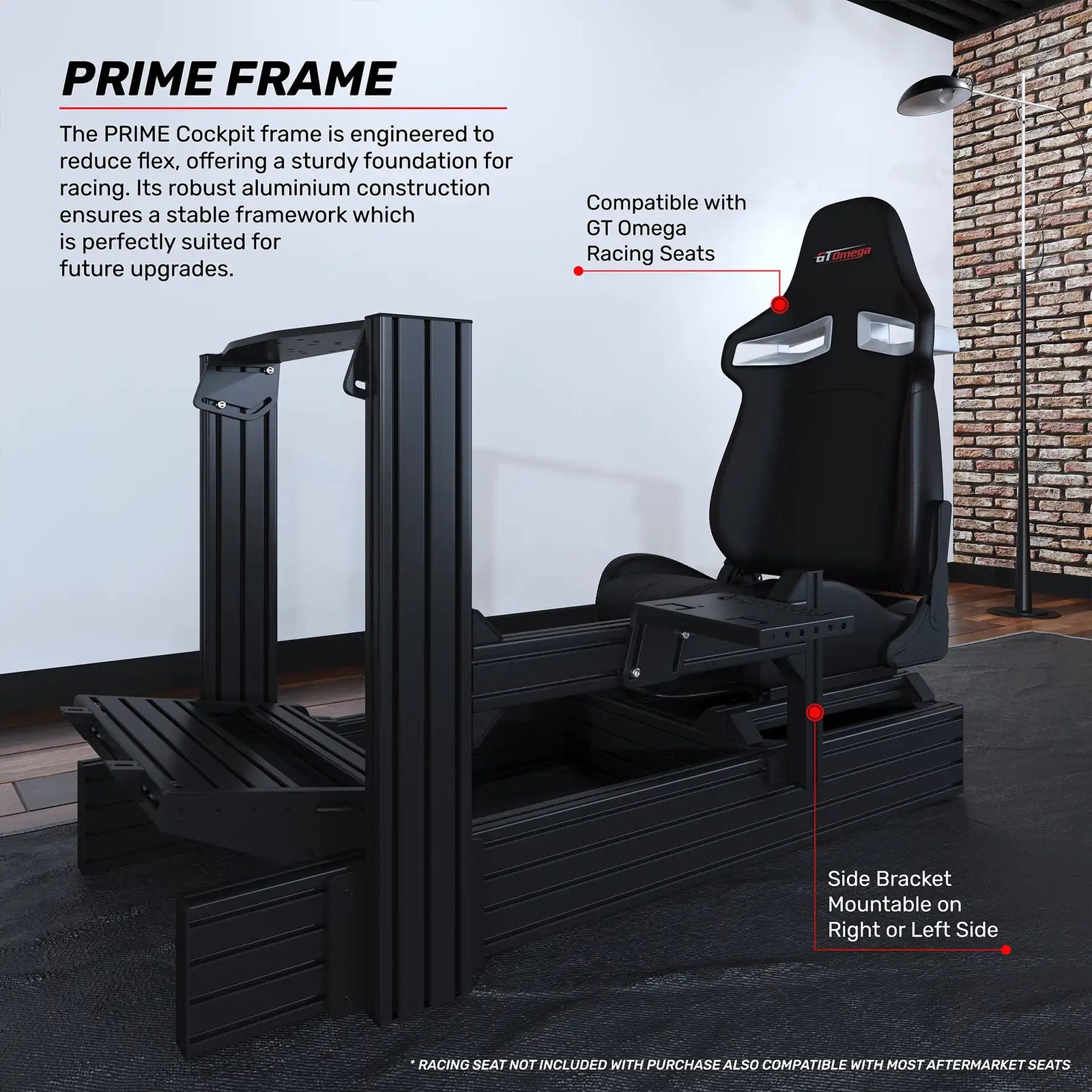
GTOmega Apex Aluminum Racing Cockpit Review — The ultimate budget underdog that proves driver skill matters far more than spending thousands on a zero-flex aluminum rig
TL;DR
While it exhibits minor flex in the wheel deck and isn't built for high-torque Direct Drive wheelbases, its modularity, comfort, and sheer value make it an unbeatable choice for mid-range setups. It proves you don't need to spend thousands to reach your maximum competitive potent
Verdict: Buy
What people are saying
Sources disclosed below
Reviewer Verdicts
Avg of 4 video reviews
Geek Street, OC Racing, Karl Gosling…
Reddit Discussion
Across 66 threads in r/simracing, r/iRacing, r/simracingrigs, r/AssettoCorsa, r/granturismo, r/F1Game
Sentiment summary, not a rating
Pros
- +Outstanding value for money compared to 8020 aluminum profile rigs
- +Modular design allows the frame to split into two lightweight halves for easy storage
- +Highly adjustable seating, pedal deck, and steering column
- +Excellent compatibility with mid-range, belt-driven wheelbases and standard load-cell pedals
Cons
- −Noticeable flex in the wheel deck and upright columns
- −Not sturdy enough to handle high-torque Direct Drive (DD) wheelbases
- −Reclining seat mechanisms introduce unwanted flex under heavy braking
- −Monitor stands and caster wheels must be purchased separately
Jordan Kim
Published May 3, 2026
Price may vary. Updated regularly.
One reviewer actually sold his expensive 8020 aluminum rig to go back to this £320 budget cockpit—and his lap times didn't drop at all. It’s a reality check for the sim racing community: you don’t need to spend thousands on an industrial-grade frame to be fast.
What you're actually getting
The GT Omega ART is the ultimate "good enough" rig. After spending time with it, you realize it occupies a specific, clever niche: it’s for the driver who has moved past the desk-clamp phase but isn't ready to turn their office into a structural engineering project. It’s a tubular steel frame that prioritizes accessibility and modularity over absolute, tank-like rigidity.
When you sit in it, you aren't getting the rock-solid, zero-flex experience of an 8020 profile rig. You’re getting a functional, comfortable, and surprisingly capable platform that handles mid-range gear with ease. As Karl Gosling noted in his long-term assessment, "We really can't complain for the money we're paying here... a 200 pound cockpit is not a lot of money." It’s a piece of gear that respects your wallet while still providing a dedicated space to actually learn car control.
The modularity is the real secret sauce here. Because the frame splits into two lightweight halves, you can tuck it away if your "racing room" is also your living room. It’s not a permanent fixture that demands a dedicated garage, which is a massive win for most people. While it lacks the infinite adjustability of aluminum extrusion, it offers enough tweakability in the seating and pedal deck to get you into a proper, ergonomic driving position that beats any office chair setup by a mile.
Sound — what reviewers actually heard
While this isn't an audio product, the "performance" of a cockpit is measured in vibrations and flex. Here is how the ART stacks up under real-world load:
| Metric | Value | Context |
|---|---|---|
| Price (Frame Only) | £200 | Exceptional entry point |
| Price (With Seat) | £320-£330 | Best value for complete setup |
| Assembly Time | Under 2 hours | Manageable for one person |
| Torque Handling | 6-7 Nm | Sweet spot for belt-driven wheels |
Where it actually wins
The ART wins on the "competitive potential" front. There is a persistent myth in sim racing that you need a rig that costs as much as a used car to be fast. Danny Lee put it best: "You can hit 99% of your competitive potential on the ART. I honestly believe that." When you’re in the heat of a race, you aren't thinking about the slight flex in the uprights; you're thinking about your braking points and your apexes.
It also wins on pure value. For the price of a single high-end steering wheel rim, you get an entire cockpit that includes a seat. It’s a gateway drug to serious sim racing. If you’re currently using a desk chair that rolls backward every time you hit the brake pedal, the ART is going to feel like a revelation. It provides the consistency you need to build muscle memory, which is the only thing that actually makes you faster.
Where it falls short
Let’s be honest about the limitations: this is not a rig for the Direct Drive (DD) elite. If you’re planning on running a 15Nm or 20Nm wheelbase, you’re going to be fighting the frame, not the track. The uprights and the wheel deck will introduce oscillation that you just don't get with 8020 aluminum. It’s not that it will break, but it will distract you.
The reclining seat mechanism is another weak point. While it’s convenient for getting in and out, it introduces a pivot point that creates unwanted flex under heavy braking. If you’re running high-pressure load-cell pedals, you’ll feel the seat shift slightly, which can be annoying during threshold braking. Additionally, keep in mind that the "base" price doesn't include the extras. You’ll need to budget separately for caster wheels if you want to move it around, and the monitor stand is a separate purchase, which can quickly inflate the total cost if you aren't careful.
Should you buy it?
Buy if you
- Use a belt-driven wheelbase (like a CSL Elite or similar) and want a dedicated, stable home for it.
- Need a rig that can be moved or stored easily in a shared living space.
- Are tired of your office chair rolling away during intense braking zones.
- Want to spend your budget on better pedals or wheels rather than a frame.
Skip if you
- Are already running a high-torque Direct Drive wheelbase (10Nm+).
- Demand zero-flex rigidity and are willing to pay for the industrial look and feel of 8020 aluminum.
- Are a heavy user of high-pressure load-cell pedals who finds seat movement distracting.
The GT Omega ART is a phenomenal entry-level cockpit that delivers 90% of the performance of a premium aluminum rig for half the price.
Sources consulted
- Geek Street — The ULTIMATE Sim Racing Cockpit Buyer's Guide | Build Your PERFECT Racing Setup!
- OC Racing — Buying a Sim Racing Cockpit? Know These 20 Things FIRST
- Karl Gosling — GT Omega ART Cockpit in 2020.... A 2 Year Review
- Danny Lee — GT Omega ART Cockpit - You Can Sim Race Competitively With This
Synthesis combines independent reviews above. Verdicts and quotes attributed to original creators. Affiliate disclosure: we may earn a commission from qualifying purchases via Amazon links.
Products covered in this review
Frequently Asked Questions
Is the GTOmega Apex Aluminum Racing Cockpit worth buying?
While it exhibits minor flex in the wheel deck and isn't built for high-torque Direct Drive wheelbases, its modularity, comfort, and sheer value make it an unbeatable choice for mid-range setups. It proves you don't need to spend thousands to reach your maximum competitive potential.
Who is the GTOmega Apex Aluminum Racing Cockpit best for?
Sim racers using belt-driven wheels or entry-level load cell pedals who want a dedicated, comfortable rig without breaking the bank.
Who should skip it?
Enthusiasts running high-torque Direct Drive wheelbases or ultra-stiff pedals who require the zero-flex rigidity of an 8020 aluminum profile rig.