 SimRacingPicks
ButtKicker Gamer2 Playseat Edition Tactile Transducer Review — A highly effective, immersion-multiplying piece of hardware that is held back by neighbor-annoying acoustics and frustrating software paywalls
TL;DR
If you race in a detached home and are willing to pay for telemetry software, this is an absolute must-have that transforms your rig. However, apartment dwellers and those using USB headsets will face significant noise complaints and frustrating setup hurdles.
Verdict: Depends on Use Case
What people are saying
Sources disclosed below
Reviewer Verdicts
Avg of 4 video reviews
Danny Lee, Sim Coaches - Sim Racing, Barefoot Gaming…
Reddit Discussion
Across 34 threads in r/simracing, r/iRacing, r/simracingrigs, r/AssettoCorsa, r/granturismo, r/F1Game
Sentiment summary, not a rating
Pros
- +Provides a massive boost to physical immersion for sim racing, flight sims, and VR
- +Perfectly replicates the physical thump of a subwoofer for headphone users
- +Comes as a complete, easy-to-install package with a dedicated amplifier and remote
- +Includes a convenient quick-disconnect cable so you can move your chair away from the desk
Cons
- −Intense vibrations easily travel through floors and will disturb downstairs neighbors
- −Causes chair components and rig parts to rattle audibly, creating unwanted noise
- −Proper racing telemetry requires purchasing additional paid software like SimVibe or HaptiConnect
- −Tricky out-of-the-box setup if you use a USB headset or USB DAC
- −Requires constant manual tweaking of amplifier settings when switching between different games
Jordan Kim
Published May 3, 2026
Price may vary. Updated regularly.
This $150 sim racing upgrade will completely ruin standard gaming for you—and probably your relationship with your downstairs neighbors. If you’ve spent thousands on a direct-drive wheel and a high-end cockpit, you’re still missing the most important part of the experience: the physical connection to the road. The ButtKicker Gamer2 doesn't just add sound; it adds the visceral, bone-rattling feedback that makes a virtual car feel like a two-ton machine rather than a digital ghost.
What you're actually getting
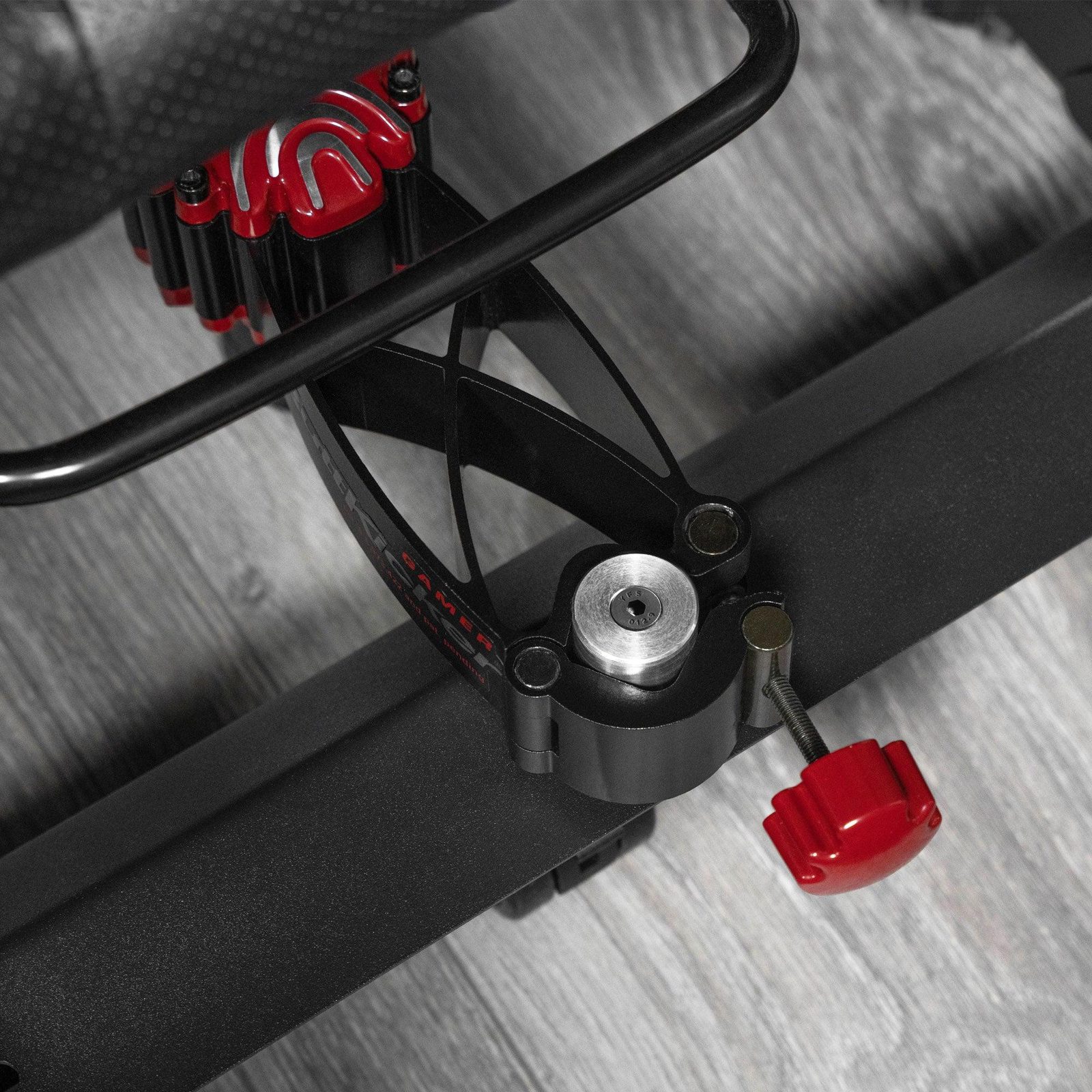
The ButtKicker Gamer2 is essentially a specialized subwoofer that bypasses your ears to speak directly to your spine. It’s a 90-watt tactile transducer that clamps onto your rig, turning your entire chair into a low-frequency speaker. For those of us who rely on headphones for spatial awareness, it fills the void left by the lack of a physical subwoofer. As Capsule Computers noted, "One of the sad things I really missed was the thunder of a good subwoofer," and this device solves that problem with aggressive, immediate efficiency.
However, you need to be realistic about what you're buying. This isn't a plug-and-play miracle for everyone. If you’re running a USB headset or a dedicated USB DAC, you’re going to spend your first hour fighting with audio routing just to get the signal to the ButtKicker’s amplifier. It’s not a refined, high-fidelity experience out of the box; it’s a blunt instrument. While some users find the raw audio-driven rumble perfectly adequate, others—like the team at Sim Coaches—argue that without dedicated telemetry software, you’re just getting a "jumbled mess" of vibrations that don't actually correlate to what’s happening on track.
Once you get it dialed in, the immersion is undeniable. Danny Lee put it best when he said, "I can't actually stomach racing without it anymore." It turns a flat, visual-only experience into a full-body event. But that power comes with a cost: the physical vibration is so effective that it will travel through your floorboards and into the structure of your house. If you live in an apartment, your downstairs neighbors will know exactly when you’re hitting the curbs at Spa.
Sound — what reviewers actually heard
The "sound" here isn't something you hear; it's something you feel. The performance depends entirely on how you feed it.
| Metric | Value | Context |
|---|---|---|
| Amplifier Power | 90 Watts | Plenty of headroom for most rigs |
| Setup Time | ~5 Minutes | Fast, but routing audio is the real hurdle |
| Cable Length | ~10 Feet | Sufficient for most desk setups |
| Extra Software | $30 - $89 | Often required for true telemetry |
Where it actually wins
The primary victory here is the sheer level of immersion. In VR, where your eyes are already tricked into believing you're in a cockpit, the ButtKicker provides the missing sensory input that prevents motion sickness and increases focus. When you hit a rumble strip or feel the engine idle through your seat, your brain stops questioning the reality of the simulation.
The hardware package itself is also surprisingly well-thought-out for the price. The quick-disconnect cable is a godsend if you use your rig for work and need to push your chair away from the desk. It’s a robust, heavy-duty piece of kit that feels like it belongs in a professional studio rather than a toy store. When it works, it’s the single most transformative upgrade you can make to a sim rig for under $200.
Where it falls short
The biggest hurdle is the "noise floor" of your own equipment. Because the ButtKicker is so powerful, it will expose every loose bolt, plastic creak, and rattling washer in your cockpit. You’ll spend as much time tightening your rig as you do racing. It’s a paradox: you buy it to feel the car, but you end up feeling your chair’s structural weaknesses instead.
Then there is the software tax. If you want the ButtKicker to react to specific telemetry—like tire slip or gear shifts—rather than just the raw bass frequencies of the game audio, you have to buy third-party software like HaptiConnect or SimVibe. It’s frustrating that a $150 device requires another $80 investment to function as intended. Furthermore, if you’re a multi-game player, prepare to be a full-time audio engineer. You will be constantly tweaking the amplifier’s crossover and intensity settings every time you switch from a flight sim to a racing title, as the frequency response of each game is wildly different.
Should you buy it?
Buy if you
- Have a dedicated space where floor-shaking vibrations won't cause domestic disputes.
- Are a VR user looking to bridge the gap between sight and physical sensation.
- Are willing to invest in third-party telemetry software to get the most out of the hardware.
- Use an analog audio setup that makes signal routing straightforward.
Skip if you
- Live in an apartment or shared housing with thin floors.
- Use a USB-based audio interface and don't want to deal with complex routing software.
- Expect a "set it and forget it" experience without needing to tweak settings per game.
- Have a flimsy, lightweight cockpit that will rattle more than it vibrates.
The ButtKicker delivers game-changing physical immersion, but hidden software costs and neighbor-waking vibrations make it a conditional recommendation.
Sources consulted
- Danny Lee — Buttkicker Review - My FAVOURITE Sim Racing Accessory
- Sim Coaches - Sim Racing — BUTTKICKER Is Ruining Your Racing Sim!
- Barefoot Gaming — Buttkicker Gamer 2 Review for Virtual Reality
- Capsule Computers — Buttkicker Gamer 2 Review
Synthesis combines independent reviews above. Verdicts and quotes attributed to original creators. Affiliate disclosure: we may earn a commission from qualifying purchases via Amazon links.
Products covered in this review
Frequently Asked Questions
Is the ButtKicker Gamer2 Playseat Edition Tactile Transducer worth buying?
If you race in a detached home and are willing to pay for telemetry software, this is an absolute must-have that transforms your rig. However, apartment dwellers and those using USB headsets will face significant noise complaints and frustrating setup hurdles.
Who is the ButtKicker Gamer2 Playseat Edition Tactile Transducer best for?
Sim racers, flight sim enthusiasts, and VR gamers in detached homes who use headphones but miss the physical punch of a subwoofer.
Who should skip it?
Apartment dwellers with downstairs neighbors, or users unwilling to constantly tweak amplifier settings and buy extra telemetry software.